Fake bomb threats hit European flights again: is this hybrid war?
Fake bomb threats forced at least 25 flights to divert or take escorts across Europe on Thursday. Experts ask whether it is a hybrid war tactic.
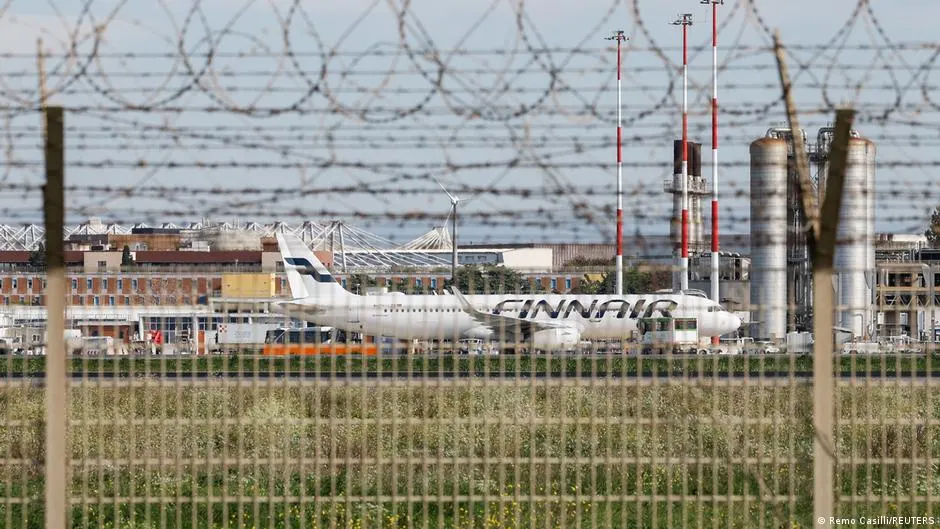
Not one bomb was found. Yet on Thursday, fake threats still disrupted dozens of flights across Europe, for the second time in a single week.
What happened?
The threats targeted airlines from Ireland to Bulgaria. At least 25 flights were diverted or escorted, including ones heading to Rome, Milan, Paris, Prague and Sofia.
In Bulgaria, military jets escorted three passenger planes. A flight from London was sent to Plovdiv instead of Sofia. In Spain, authorities received three email threats in under 20 minutes, aimed at six flights between Madrid and Paris, Rome and Milan.
Flights in the Czech Republic, Italy, Austria, Poland and Romania were affected too. In Copenhagen, a military bomb-disposal unit searched two planes and found nothing. Almost every flight ended with a safe landing.
Why are people talking about hybrid war?
"Hybrid war" means pressure without open fighting, such as cyberattacks or disruption of daily services. Some experts see that pattern here.
Erik Schouten, head of aviation security group Diami, noted that most of the affected countries back Ukraine in its war against Russia. He said Europe should always consider a scenario where a state attacks on several fronts, from railways to supermarkets and, recently, blood banks.
Counter-terrorism expert Peter R. Neumann said the events have the features of a coordinated hybrid attack. He stressed, though, that there is no evidence that Russia is involved.
The threats also came as cyberattacks hit cooling systems in supermarkets in several European countries, and as blood banks in France saw disruption. Eliran Almog, CEO of aviation cybersecurity firm Cyviation, said the threats may aim to disrupt operations and see how airlines, airports and national authorities respond.
What is the real cost?
Cheap fake threats can drain security resources and cost airlines and airports a lot within hours. Almog warned that such disruption carries economic costs and can erode public trust.
Neumann pointed to another risk: if nothing happens a hundred times, vigilance fades on the 101st. That, he said, is exactly where the danger lies.
What's next?
Earlier this week, similar threats targeted around 20 flights, and fighter jets were called in. Whether this is an organised campaign or a string of unrelated hoaxes is still unclear.
European authorities face a double challenge: staying fully alert while avoiding a shutdown of transport and essential services over alarms that turn out to be false.
Story timeline
Bomb threats against European flights · 2 updates
What happened before and after this story. Background events not previously covered were summarised by AI.
More in: News
See all →
Could smoky bacon crisps be banned? Minister tells host to 'get a life'

Bird flu antigen found at duck farm in Jangheung, triggering 24-hour standstill

Erdoğan on the flight home from Seoul: Azerbaijan trip, Putin call and more